Is it legal to play at mobile casino apps in Malaysia?
Malaysia's federal gambling laws restrict most forms of gambling for Muslim residents and don't specifically regulate offshore online casinos. Many Malaysian players use internationally licensed mobile casino platforms, but you should check local regulations in your state and always play responsibly.
How do you choose which mobile casino apps to rank?
Every platform is scored against a seven-point checklist covering licensing, game selection, bonus fairness, payment support, customer support, mobile UX, and security. See our full methodology in the "How We Choose A Top Mobile Casino" section above.
What's the average welcome bonus at Malaysian mobile casinos?
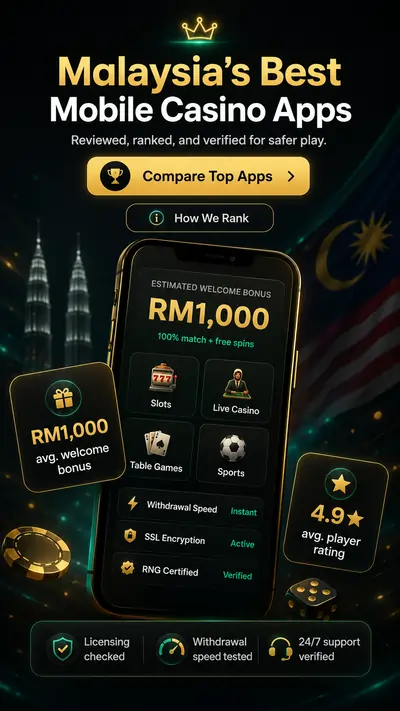
Across the platforms we've reviewed, the average welcome bonus is around RM1,000, typically structured as a percentage match on your first deposit plus free spins. Always read the wagering requirements before opting in.
How fast are withdrawals on mobile casino apps?
E-wallet withdrawals via Touch 'n Go, GrabPay, and Boost are typically processed in under 5 minutes on the platforms we tested, while bank transfers can take 1–3 business days.
Do I need to download an app, or can I play through my mobile browser?
Most platforms we review offer both a downloadable app for Android/iOS and a mobile-optimized browser version, so you can play without installing anything if you prefer.
Which payment methods are supported?
Touch 'n Go, GrabPay, Boost, BigPay, bank transfers, Visa/Mastercard, and crypto (Bitcoin/USDT) are the most commonly supported payment methods across the apps we cover.
What is RTP, and why does it matter when choosing a slot?
RTP (Return to Player) is the theoretical percentage of wagered money a slot pays back over its lifetime — a 96% RTP slot returns RM96 for every RM100 wagered on average. Higher RTP generally means better long-run value. See our full RTP guide for how volatility factors in.
What's the difference between live dealer and RNG games?
Live dealer games stream a real dealer operating physical cards or a wheel from a studio, while RNG (Random Number Generator) games like slots use certified software to determine outcomes instantly. See our live dealer vs RNG guide for a full comparison.
Are wagering requirements the same for every type of bonus?
No. Welcome and reload bonuses usually carry higher multipliers (commonly 20x–35x), no-deposit bonuses tend to carry steeper requirements and lower withdrawal caps, and cashback is often paid with little or no wagering attached. See our wagering requirements guide before opting in.
Which e-wallet is best for mobile casino deposits and withdrawals?
Touch 'n Go eWallet, GrabPay, and Boost are the three most widely supported e-wallets across Malaysian mobile casino apps, all offering instant deposits and withdrawals typically under 5 minutes. See our e-wallet casino guide for a full comparison.
Can I set deposit or loss limits on a mobile casino app?
Most licensed platforms let you set daily, weekly, or monthly deposit and loss limits from your account settings. We recommend setting these before you start playing — see our responsible gaming resources for more tools.
What's the typical minimum deposit at Malaysian mobile casino apps?
Minimum deposits typically range from RM10 to RM50 depending on the platform and payment method, with e-wallets like Touch 'n Go often having the lowest minimums.
Do these mobile casino apps work on both Android and iOS?
Yes. Every platform in our rankings supports both Android and iOS, either through a downloadable app or a mobile-optimized browser version that works the same way across devices.
How can I tell if a mobile casino app is safe and properly licensed?
Check for a visible license number from a recognized regulator such as the Malta Gaming Authority, Curaçao eGaming, or PAGCOR, plus SSL/TLS encryption and RNG certification from labs like GLI or iTech Labs. See our legal guide for more detail.
What should I do if I have a dispute with an operator?
Start with the platform's live chat or support team, and keep records of your communication. If unresolved, licensed operators are required to provide an escalation path to their regulator's dispute resolution service.

















 Guide